Could Your Care Business Keep Running Without You?

A strong business benefits from capable people whereas a vulnerable business depends on them.
Is your business too dependent on you and hence a ‘vulnerable business’?
Last week I wrote about the difference between a business that is resilient and one that has simply become very good at coping.
One of the clearest signs of that difference is dependency. And without doubt, the hardest dependency to see is the one built around you.
Business owners in the care sector and other sectors have asked me over the years to help them expand their business. Invariably they work hard IN their business and have very little or no spare time.
If your business needs you in it most days to keep functioning, where are you going to find the time to make it stronger, more financially healthy and more efficient?
And how do you make sure it stays that way when you are not there?
These are crucial questions you should ask and if your answer is that you don’t have much spare time or fear the business would suffer without you then this is a huge vulnerability that you should absolutely prioritise addressing.
When business owners have asked for my help in this, the first thing I say is, “We need to make you redundant.” That usually gets me a look.
After explaining why – eliminate this over dependency on them – we next look at just what is taking up their time. This inevitably highlights just how dependent the people in the business — and the business itself — have become on them.
What would happen if you disappeared for a month?
Imagine you became completely unavailable for four weeks. No phone calls or emails. No quick answers. No decisions or direction.
What would happen?
- Would the business continue to run confidently?
- Would managers make decisions at the right level?
- Would people know where information was?
- Would customers, families, staff and commissioners still get the answers they needed?
- Would occupancy or number of contracted hours be maintained?
Would the right decisions be made and the problems resolved confidently by your team or would they worry about your absence, be afraid to make the decisions and solve the problems?
Good people should strengthen the business - not become the business
Every business needs capable people. You want good leaders and managers in place (while also nurturing your future leaders). They make an enormous difference but there is a tipping point.
When too much knowledge, authority or problem-solving ability becomes concentrated in one person - perhaps you - or in a small handful of people, the business itself becomes more vulnerable.
The relationship is simple: the more the business depends on one or two people, the less resilient the organisation itself becomes.
High dependency means lower organisational capability — and greater vulnerability.
A resilient business takes the knowledge, judgement and experience of its best people and turns it into something the wider organisation can use so that others throughout the organisation can confidently make decisions that keeps their area of responsibility working efficiently and effectively.
And in your or their absence, others in the business can pick up the baton and run with it.
For this to happen, the business needs:
- Clear responsibilities.
- Documented processes.
- Accessible information.
- Defined authority.
- Agreed escalation.
- Repeatable ways of working.
That is how capability becomes part of the business rather than remaining trapped inside individuals.
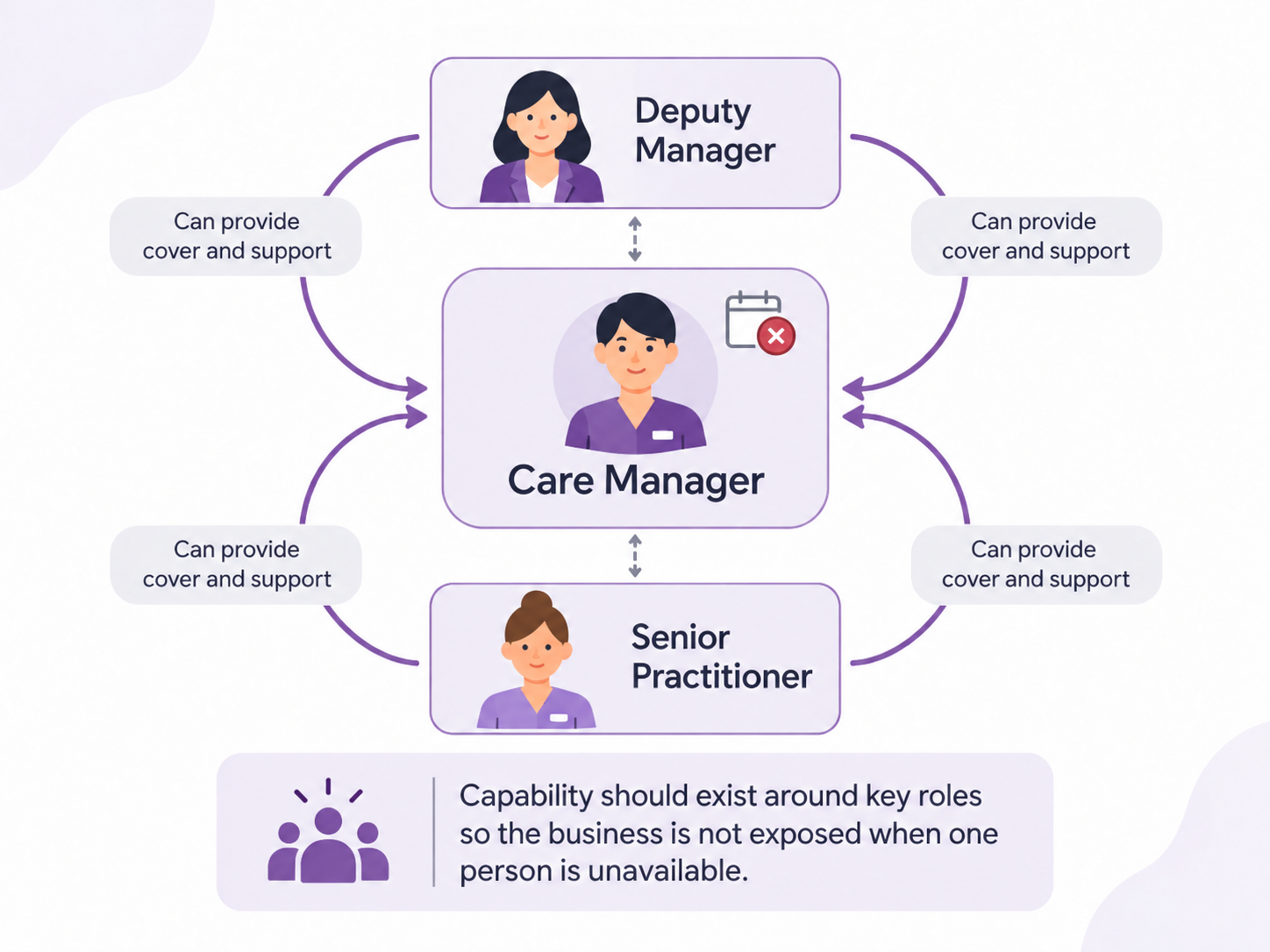
Ideally, capability should exist around key roles. For example, if the care manager normally manages the rota, designated others should know how to access it, understand it and manage it in their absence - perhaps a deputy manager above and a senior practitioner below - so the business is not exposed when one person is unavailable.
Dependency slows the business down
When too many decisions have to travel upwards, problems sit unresolved until you or another right person is available.
And you or that ‘right person’ becomes a bottleneck. You get increasingly dragged into operational detail, into resolving issues, into answering questions, into being reactive.
And the more time you (or they) spend rescuing the day-to-day, the less time you have to lead, strengthen and develop the business itself.
On top of that, the people who should be making decisions don’t. They don’t grow as managers if they are never given the opportunity to take responsibility. That’s a leadership issue and for another time.
This unhealthy dependency leads to stagnation. The business keeps operating, but its leadership has too little capacity to move it forward.
Independence is not about making people unnecessary
Creating a more independent business does not mean your best people become less important. It means their time and capability are used better.
- A good manager should not spend every day answering questions that could have been resolved by clear processes and authority.
- An owner should not be the only person who understands the numbers.
- A senior member of staff should not be the only person who knows how to handle an incident.
The objective is not to remove valuable people. It is to stop the organisation becoming dependent on them for things that should belong to the organisation itself.
That is what strong systems do.
They take knowledge that currently sits in individuals and make it available to the business. That independence makes the business far stronger.
What independence gives you
A business that can function without constant intervention - a well systemised business - is a stronger, better business.
Your team becomes more confident and capable, responsibilities become clearer, and the service is less dependent on memory, workarounds and individual heroics. And without doubt, you would be called on far less to resolve issues or correct mistakes.
Your business becomes more efficient and effective, and it also frees you and your senior team up to step back and steer the business to where you ultimately want it to be.
The business becomes a resilient, strategically led business that is easier to grow, that is more profitable and eventually, if that is part of your plan, becomes easier to hand over or sell.
Individual capability becomes organisational strength - that is why independence matters.
Try the four-week test
Imagine you were unavailable for the next four weeks.
- What are the first things that worry you?
- Who would make certain decisions?
- Who knows how a particular process works?
- Who has access to important information?
- Who understands the financial position?
- Who deals with a particular commissioner?
- Who knows what happens if a key system fails?
- Who knows the workaround everyone currently relies upon?
Write those concerns down - what you have just created is a map of dependency and that map tells you where the business needs strengthening.
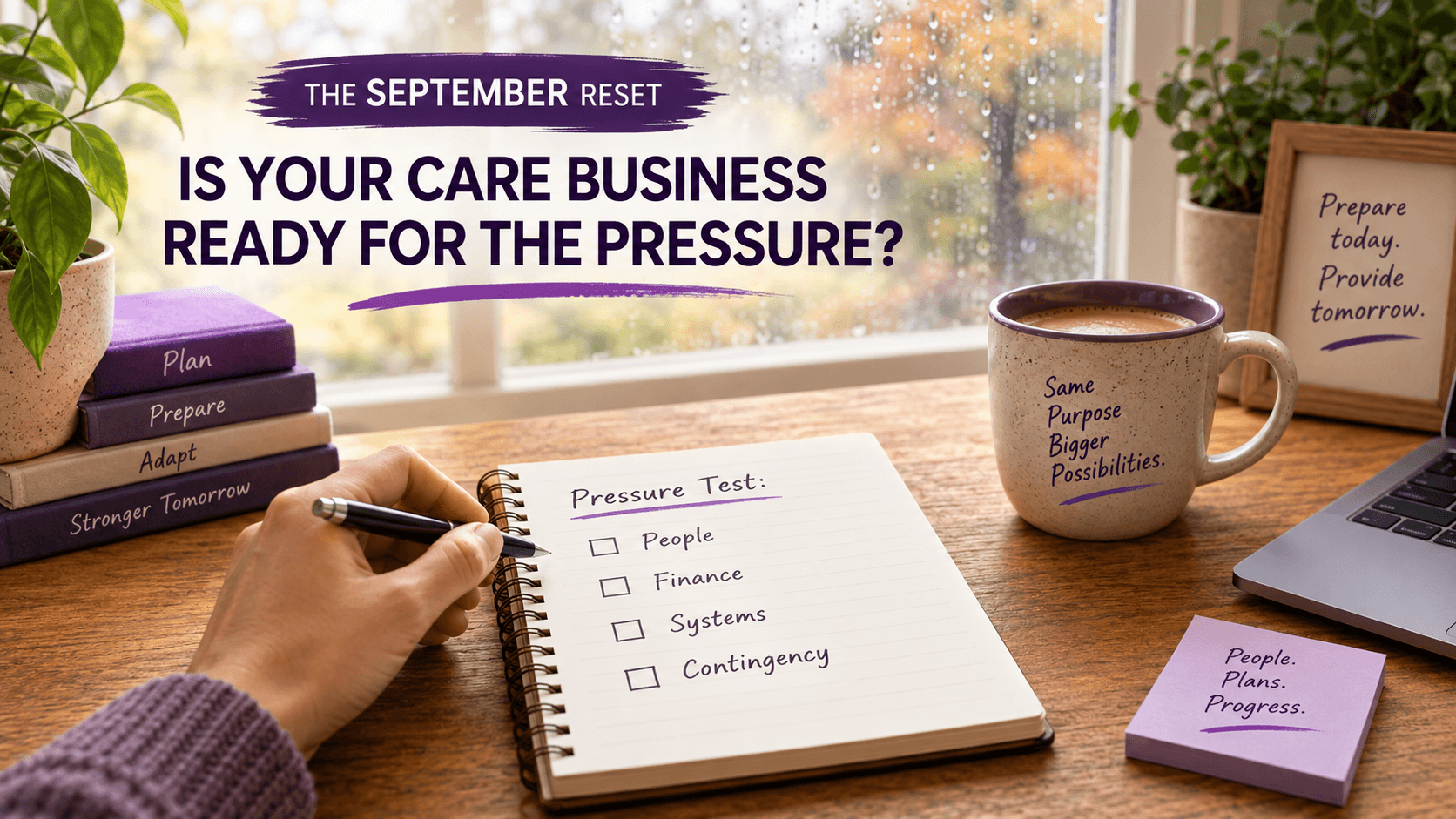
And yes, I know it’s October — but The September Reset Guide is still a useful way of identifying where those dependencies and recurring problems sit.

Then ask a second question
For every dependency you identify, ask, does this need to remain with one person?
Sometimes the answer will be yes as there will always be responsibilities that sit with specific roles, such as the payroll run.
But many things do not need to depend on individuals - they need to depend on systems.
- If one person currently holds the knowledge, can it be documented?
- If one manager always makes a particular decision, can authority be clarified so others can make that decision?
- If one person knows how to solve a recurring problem, can the correct process be captured and that problem eliminated?
- If something only works because somebody remembers what happened last time, can that experience be turned into a better way of working?
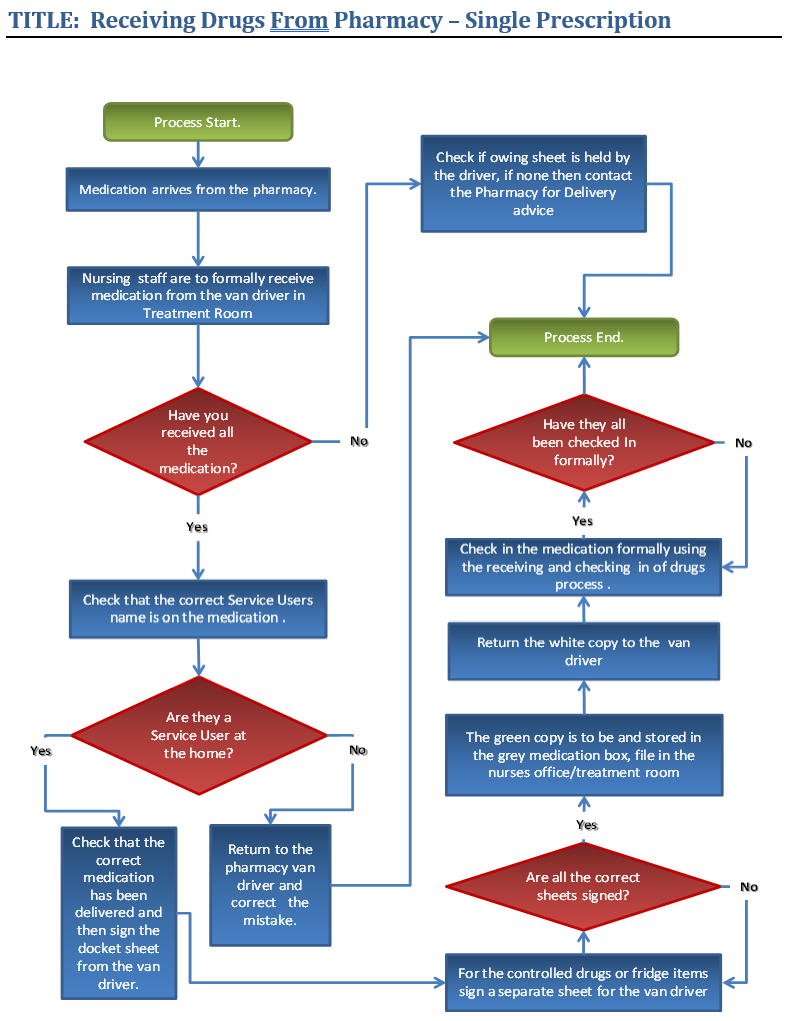
And by now you know the answer to these questions is a resounding yes.
The goal is not to make good people less important. It is to make sure the business becomes stronger because of them, rather than dependent on them — or on you.
And there is another reason this matters - if your business depends too heavily on one person, one process, one supplier or one system, that dependency does not just slow the organisation down — it also becomes a continuity risk.
What happens if that person is suddenly unavailable? If that system fails? If a supplier cannot deliver? If severe weather, power failure or an IT problem interrupts normal operations?
That is where resilience stops being an abstract idea and becomes something you need to plan for.
Next week: Your Business Continuity Plan: Would It Actually Work?


Products

Home Care Fee Calculator